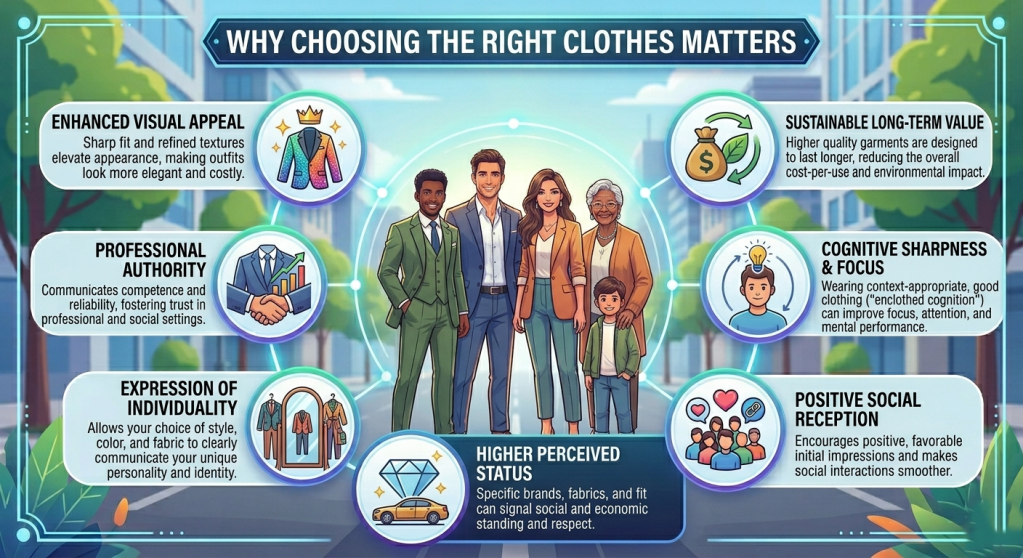
Stand in front of your closet for a minute. How many of those clothes do you actually reach for? And how many are just taking up space because they seemed like a good idea at the time?
Most people own more clothes than they wear. The problem usually isn’t quantity. It’s a choice.
Picking the right clothes, not just any clothes, changes how you feel, how you’re perceived, and how much money you actually save. Sometimes that means waiting for a real yard of deal on the right piece instead of grabbing the first cheap option you see.
Let’s break down why making smart clothing choices actually matters.
The Real Difference Between Buying Clothes and Choosing Them
There’s a big gap between buying clothes and choosing clothes. Buying is reactive. You see something, you like the price, you grab it.
Choosing is intentional. You think about fit, fabric, purpose, and how it fits into the rest of your wardrobe.
This shift in mindset is where most people start saving money and building a wardrobe that actually works for them.
Why This Distinction Matters
People who buy reactively often end up with closets full of items that don’t match, don’t fit well, or simply don’t get worn. People who choose intentionally end up with fewer, better pieces that work harder for them.
It’s not about spending more. It’s about spending smarter.
Top Reasons Choosing the Right Clothes Matters
Here’s where this becomes practical. These are the real reasons your clothing choices carry more weight than you might think.
1. Comfort Affects Your Whole Day
Wrong clothing choices show up fast. Tight waistbands, scratchy fabric, or shoes that don’t fit properly can ruin an otherwise good day.
Choosing clothes based on comfort, not just appearance, means you can focus on your actual tasks instead of constantly adjusting your outfit.
This matters whether you’re at work, traveling, or just running errands around town.
The Hidden Cost of Ignoring Comfort
Uncomfortable clothing doesn’t just feel bad. It can affect posture, mood, and even productivity throughout the day. Choosing the wrong size or fabric type creates problems that ripple beyond just physical discomfort.
2. The Right Fit Changes Everything
Two people can wear the exact same shirt, and it can look completely different depending on fit. Proper fit flatters body shape, while poor fit can make even expensive clothing look sloppy.
This is why tailoring exists. Sometimes the right choice isn’t a different garment altogether, but the right size or a few small adjustments.
Choosing clothes that fit properly, rather than clothes that are simply available, makes a noticeable difference in how put-together you look.
3. Saves Money in the Long Run
Choosing wisely means fewer wasted purchases. Instead of buying five mediocre shirts that get pushed to the back of the closet, you buy two or three that actually get worn regularly.
This is where patience pays off. Waiting for a legitimate yard of deal on a well-made piece, rather than settling for poor quality at full price, stretches your clothing budget much further.
Smart choices reduce impulse buying, which is one of the biggest drains on a clothing budget.
4. Supports a Functional Wardrobe
A wardrobe full of random pieces rarely works well together. A wardrobe built with intention, even a small one, tends to mix and match easily.
Choosing clothes that complement what you already own means getting more outfit combinations out of fewer items.
This is the foundation of what many people now call a capsule wardrobe, though the concept has existed long before the term became popular.
5. Reflects Your Personal Style
Clothes you choose carefully tend to reflect who you actually are, not just what was on sale or trending that week.
This doesn’t mean every piece needs deep meaning. It simply means your wardrobe starts to feel more like “you” instead of a random collection of items.
Over time, this leads to a more consistent, recognizable personal style.
6. Impacts How Others Perceive You
People notice clothing choices, even subconsciously. Well-chosen clothes signal attention to detail, while mismatched or poorly fitting clothes can send the opposite message.
This matters in professional settings, social situations, and even first impressions with new people.
Choosing the right clothes for the right context, whether that’s a job interview or a casual weekend outing, helps you communicate the impression you actually want to give.
7. Reduces Decision Fatigue
A closet full of well-chosen, versatile pieces makes getting dressed easier every single day. Fewer options that all work well together actually reduce stress compared to overflowing closets full of mismatched items.
This is part of why some people choose to simplify their wardrobe deliberately, sticking to a smaller set of clothes they know fit and flatter them.
Choosing well upfront saves mental energy every single morning.
8. Better for Long-Term Durability
The right clothing choice often considers fabric quality and construction, not just style. Choosing well-made pieces, even if it means waiting for the right discount, leads to clothes that last significantly longer.
Spotting a real yard of deal on a quality jacket or a sturdy pair of jeans is far more valuable than grabbing a cheap, poorly made version that falls apart within months.
This connects directly back to saving money over time.
9. Supports More Sustainable Habits
Choosing thoughtfully usually means buying less overall. Fewer, better pieces reduce textile waste and unnecessary consumption compared to constantly replacing poor-quality items.
This shift benefits both your wallet and the environment, even if sustainability wasn’t the primary goal behind the choice.
10. Builds Confidence Over Time
Wearing clothes that fit well, suit your style, and feel comfortable builds quiet, consistent confidence. This isn’t about dramatic transformations. It’s about small, daily improvements in how you feel in your own clothes.
Over time, this adds up to a noticeable difference in how you carry yourself.
How to Choose the Right Clothes
Knowing why choice matters is one thing. Actually making better choices is another. Here’s a practical approach:
- Know your body and what fits well. Pay attention to cuts and styles that consistently work for your shape.
- Prioritize fabric quality. Check seams, fabric weight, and stitching before buying.
- Buy with your existing wardrobe in mind. Ask if a new piece actually pairs well with what you already own.
- Be patient for the right discount. A genuine yard of deal on the right piece beats rushing into a cheaper, lower-quality alternative.
- Avoid trend-only purchases. Trendy pieces fade fast, both in style and often in physical quality.
Common Mistakes People Make
Many people choose clothes based purely on price or trend, ignoring fit and fabric entirely. Others avoid trying things on, leading to ill-fitting purchases that rarely get worn.
Avoiding these habits, even with small adjustments, leads to noticeably better clothing choices over time.
Conclusion
Choosing the right clothes isn’t about being picky or high-maintenance. It’s about being intentional with something you do every single day.
The right choices affect your comfort, your confidence, your budget, and even how others perceive you. None of this requires an oversized wardrobe or constant shopping trips.
It simply means slowing down, checking fit and fabric, and occasionally being patient enough to catch a genuine yard of deal on the pieces that actually matter.
Next time you’re shopping, pause before grabbing the first option. A little intention now saves a lot of regret later.
FAQs
1. Why does fit matter more than style when choosing clothes? Even stylish clothing looks off if it doesn’t fit properly. Good fit improves how clothes look and feel, making it a higher priority than style alone.
2. How can I avoid buying clothes I never wear? Choose pieces that match your existing wardrobe and lifestyle, rather than buying based on trends or impulse. This naturally reduces unused purchases.
3. Is it worth waiting for sales instead of buying immediately? Often, yes. Waiting for a real yard of deal on a quality item is usually smarter than settling for a lower-quality option just because it’s available now.
4. Does choosing the right clothes really affect confidence? Yes. Comfortable, well-fitted clothing tends to boost confidence simply by making you feel more at ease in your own skin throughout the day.
5. What’s the easiest way to start making better clothing choices? Start small. Focus on a few versatile, well-fitted basics before expanding your wardrobe, and prioritize fabric quality over flashy trends.


